
ISO management systems in the Angolan mining sector: strategic value, operational maturity, and sustainability
Interview with Dr. Irene Barata, CEO of PetroShore Compliance.
The Angolan mining sector is undergoing a period of consolidation. Production alone is no longer enough. Today, competitiveness depends on demonstrating sound management, risk control, and alignment with international standards.
In this context, ISO 9001, ISO 14001, and ISO 45001 standards are becoming established as strategic tools. They contribute to operational efficiency, incident prevention, and trust among investors, financiers, insurers, regulators, and communities.
PetroShore Compliance maintains an active presence in the Angolan mining sector. It provides consulting services for the effective implementation of ISO management systems in organizations with highly complex operations. Notable projects include Sociedade Mineira do Luele, ENDIAMA E.P., GEOANGOL, and CEFOPE.

Technical note: ISO does not certify organizations. Certification is carried out by independent bodies through audits of the systems implemented.
Why have ISO systems become so important in Angolan mining?
Q. Why are ISO management systems becoming relevant in the mining sector?
Because mining is a highly complex and risky activity, where sound management is measured by the ability to anticipate, control, and improve performance. ISO standards—in particular ISO 9001, ISO 14001, and ISO 45001—offer a common structure based on a process approach, risk-based thinking, and the PDCA cycle, requiring planning, operational control, change management, performance monitoring and evaluation, non-conformity handling, and continuous improvement. In practice, this enables organizations to move from reactive to proactive management, with decisions based on data and objective evidence, aligned with the expectations of investors, regulators, and other stakeholders.
What changes, technically, when a large project adopts an ISO system?
Q. What impact does the adoption and maintenance of ISO systems by mining companies have on Angola?
It changes the way operations are controlled on a day-to-day basis. Instead of relying on informal practices, the organization begins to work with defined criteria for critical activities, checkpoints, records, and clear rules of conduct. This includes, for example, how process and product quality are controlled, how relevant environmental aspects are managed, how accidents are prevented, and how incidents are handled until the cause is eliminated. The result is very practical: fewer deviations and rework, fewer incidents, and greater operational stability, because management is now based on control, monitoring, and continuous improvement.
What is the importance of ISO standards for investors and financial institutions?
Q. Why do investors and financiers value ISO systems?
Because a well-implemented ISO system is a sign of maturity in management and operational control. It shows that the organization has clear policies and objectives, monitors performance using indicators, manages deviations in a structured manner, and regularly reviews the effectiveness of the system at the management level. For investors, banks, and insurers, this is relevant because it does not eliminate risk, but it demonstrates that risk is identified, assessed, controlled, and monitored, with evidence and consistency—which reduces uncertainty and facilitates technical, environmental, and safety due diligence processes.
Health and safety: what changes in practice?
Q. What specifically changes for workers?
It changes the way occupational health and safety is organized and controlled by the company. ISO 45001 requires that Occupational Health and Safety be treated as a system: hazard identification, risk assessment, definition of controls for critical activities, emergency preparedness, and learning from incidents through investigation and corrective actions. For workers, this translates into clear criteria for safe work, consistent training, reporting mechanisms, consultation and participation, and greater predictability in preventive measures, with a focus on eliminating causes and not just treating consequences.
Environment: from formal compliance to effective control
Q. And in environmental terms?
ISO 14001 shifts the organization from "intention-based" management to control-based management. It requires identifying environmental aspects with a significant impact, defining control measures, monitoring critical issues, and managing compliance obligations in a systematic manner. In practice, this means preventing impacts, detecting deviations earlier, responding with concrete actions, and demonstrating environmental performance with data and evidence—which also improves credibility with communities, authorities, and partners.
Impact on the value chain and suppliers
Q. What impact does this have on suppliers, service providers, and subcontractors?
In mining, a significant portion of the work is carried out by suppliers, service providers, and subcontractors, which means that these entities are, in practice, key stakeholders in the overall performance of the operation. With the implementation of ISO standards, the organization applies clearer and more consistent rules for selection, qualification, and performance evaluation, defining quality, environmental, and OHS requirements, and ensuring control of contracted activities and their results. This framework tends to produce a positive chain effect: as requirements and evaluation become more demanding and objective, many suppliers evolve toward higher levels of organization—and, in several cases, are motivated to implement their own management systems and move toward certification in order to remain competitive and eligible. The advantage for the operation is direct: control and predictability of the supply chain are increased, variability in execution is reduced, recurring failures are decreased, and the management of indirect risks associated with contracted activities is improved.
Relationship with regulators and authorities
Q. Do ISO standards help or complicate the relationship with regulators?
They help—and can help a lot—when there is a clear understanding that ISO standards do not replace the law, but rather structure the way in which the organization ensures and demonstrates compliance with its obligations. An ISO system requires identifying compliance obligations, integrating legal requirements into operational control, periodically evaluating compliance, and maintaining evidence. For authorities, this facilitates monitoring, because there is greater traceability, greater consistency, and greater responsiveness with structured information. For the companies involved, the advantage is not just "compliance": it is reducing operational and reputational risk, anticipating deviations, improving business stability, and strengthening institutional trust—which is particularly relevant in high-risk sectors such as mining.
Responsible communication of ISO certifications
Q. What are the main considerations when communicating certifications?
Communicating certification is important—and must be done. In many organizations, certification is a strategic goal and also a motivating internal objective: it represents the result of joint work, team involvement, and the consolidation of new practices. The essential thing is that communication is done truthfully, clearly, and with a sense of continuity. First, it is important to convey that certification is not a point of arrival, but a milestone within a system that must be maintained and improved year after year. The real value lies in the organization's ability to consistently demonstrate that it learns from deviations, reinforces controls, improves performance, and responds to the expectations of its stakeholders — employees, communities, regulators, investors, customers, and partners. Second, the message must be technically rigorous: communicate "certified according to ISO X," indicate the certifying body, and clarify the scope (activities, processes, and locations covered). This clarity protects credibility and prevents misinterpretation. Finally, from PetroShore Compliance's point of view, communicating these achievements makes sense because we see each client as a partner. PetroShore Compliance is a stakeholder in the implementation process, working closely with organizations to define a management system model that the company identifies with and that is operationally sustainable. When a client achieves implementation and certification, disclosure—always with rigor and respect for applicable rules—is also a way to recognize collective effort, reinforce market confidence, and demonstrate that it is possible to consistently raise industry standards.
About SMLuele and ENDIAMA E.P.
Q. In recent public communications, there has been talk of ISO certifications in key projects in the sector, such as SMLuele and ENDIAMA E.P. Without going into internal details, what is your interpretation of these developments?
These are very positive and technically relevant signs. When leading organizations move forward with the implementation of international standards, this sends a clear message to the market of their commitment to quality, environmental management, and occupational health and safety, and demonstrates the country's ability to operate with internationally recognized standards and structured continuous improvement. PetroShore Compliance, within the scope of its consulting contracts, supported these implementation processes through experienced consultants, working side by side with internal teams in the definition, operationalization, and consolidation of management systems tailored to the reality of each organization. We value the fact that we have contributed technically, with dedicated and targeted consulting, to help these organizations achieve their objectives.
Customer satisfaction assessment
Q. PetroShore Compliance conducts satisfaction surveys with clients at the end of and during projects. How important is this feedback to you, and how is it handled, especially when the evaluation is not positive?
Customer feedback is essential for improving our performance and is fully aligned with the logic of management systems: measure, analyze, and improve. Whenever an evaluation is less than positive, we treat it with the same seriousness as a complaint: we analyze the context, identify the causes that led to that perception, define corrective actions, and monitor their effectiveness to prevent recurrence. At PetroShore Compliance, satisfaction assessment is not a formal act—it is a management tool. It is based on these assessments, and on the evidence gathered throughout the work, that we adjust methodologies, reinforce monitoring practices, and continuously raise the technical quality of the intervention. In the ISO implementation and monitoring projects at the ENDIAMA E.P. Group and the Luele Mining Company, this assessment has an additional value: it helps us ensure that the implemented system is not only "compliant" but is also recognized as useful, applicable, and sustainable by the organization. And there is one particularly relevant indicator of trust: when clients recommend us to other organizations. For us, that recommendation is a validation of the value delivered and, at the same time, an additional responsibility to maintain the same rigor and consistency in every project.
Systems integration: an inevitable trend?
Q. What usually goes wrong when a company "wants ISO" but doesn't really change?
When the focus remains on documentation, without real changes in the way activities are planned, executed, and controlled, the system is not integrated into daily work. It usually fails in three areas: leadership and responsibility (ineffective roles and authorities), operational control (rules and criteria for critical activities that are not applied consistently), and handling of deviations (non-conformities and incidents without root cause investigation and sustainable corrective actions). Without these elements—and without indicators that show actual performance—certification may even occur, but the organization does not evolve and the system is not effectively maintained.
Technical priorities for 2026–2027
Q. What will be most relevant from a technical standpoint in the coming years?
The next step for the mining sector will be to consolidate the maturity of ISO systems and ensure their alignment with more demanding industry benchmarks, such as IRMA, which introduces broader expectations in terms of performance, transparency, and value chain. This involves strengthening operational control, risk management, and the ability to demonstrate consistent results in practice. At the same time, it will become increasingly critical to integrate clarity and robustness into other cross-cutting processes that underpin operations and market confidence, particularly compliance (obligations, integrity, reporting and treatment mechanisms) and information security (data protection, access control, continuity, and reliability of information). In other words, rather than "having certifications," the focus shifts to ensuring integrated, consistent, and sustainable systems capable of responding to international requirements and stakeholder expectations.
Final message to decision-makers in the sector
Q. What message would you leave for leaders in the mining sector?
An ISO system is not an end in itself—it is a management model. When approached in this way, it protects people, the environment, and assets, reduces losses, increases predictability, and strengthens trust. And in a sector such as mining, this maturity contributes not only to the strength of organizations, but also to the credibility of the sector and the country in the eyes of international partners.
If you are interested in our mining consulting services, please contact our team of consultants at
For more information about PetroShore Compliance's regulatory consulting services for the mining sector, visit:
> ISO 9001: Quality Management System
> ISO 14001: Environmental Management System
> ISO 45001: Occupational Health and Safety Management System
🔗 More information about ISO: Global standards for trusted goods and services
🔗 More information at IRMA
Do you want your mining operation to be at this level?
If your organization wants to operate with method, credibility, and international confidence, the path begins with structuring your management system well.
BLOG: practical articles for responsible leaders

ISO management systems in Angolan mining: interview with Dr. Irene Barata, Managing Director of PetroShore Compliance
Dr. Irene Barata, CEO of PetroShore Compliance, discusses the strategic value of ISO systems in Angola's mining industry. The interview covers operational maturity, sustainability, investor relations, and future trends.
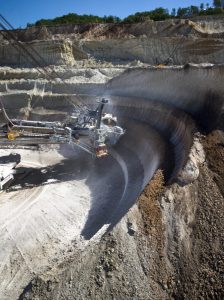
ENDIAMA E.P. strengthens its governance with ISO 9001 and ISO 14001 certifications
ENDIAMA achieves ISO 9001 and ISO 14001 certifications, consolidating a process of institutional standardization and continuous improvement in the Angolan mining sector.

SMLuele sets a milestone in Angolan mining with its triple ISO certification
SMLuele obtains triple ISO certification in mining, thanks to the support of PetroShore, consolidating an integrated system of quality, environment, and occupational safety in Angola.

The importance of the audit program according to ISO 19011
The ISO 19011 audit program is a strategic tool for strengthening compliance, improving processes, and ensuring organizational conformity. Its correct implementation drives continuous improvement.
