


All courses on the PCBSCampus platform are 50% off
⚠️ Offer limited to the first 100 customers ⚠️

"Compliance: Beyond the Rules": How to Turn Integrity into a Strategic Asset in Angolan Organizations

Compliance is no longer just about avoiding penalties. Today, it also drives decision-making, strengthens governance, and turns integrity into a competitive advantage. In the Angolan context, this evolution is particularly relevant for organizations seeking to modernize their structure, gain legitimacy, and respond effectively to increased demands for transparency.

For decades, the concept of compliance was associated almost exclusively with regulatory compliance. In other words, it meant adhering to laws, following regulations, and minimizing the risk of penalties. While that perspective remains relevant, it is no longer sufficient given the growing complexity of organizational environments, international regulatory pressure, and the demand for greater institutional accountability.

Today, when we talk about strategic compliance, we are talking about leadership, sustainability, and the ability to anticipate future developments.

In the case of Angola, which is undergoing institutional modernization, opening up to international markets, and strengthening oversight mechanisms, this transformation is even more evident. Organizations that remain stuck in a purely formal view of compliance risk acting too late, in a reactive manner, and with little connection to current governance requirements.

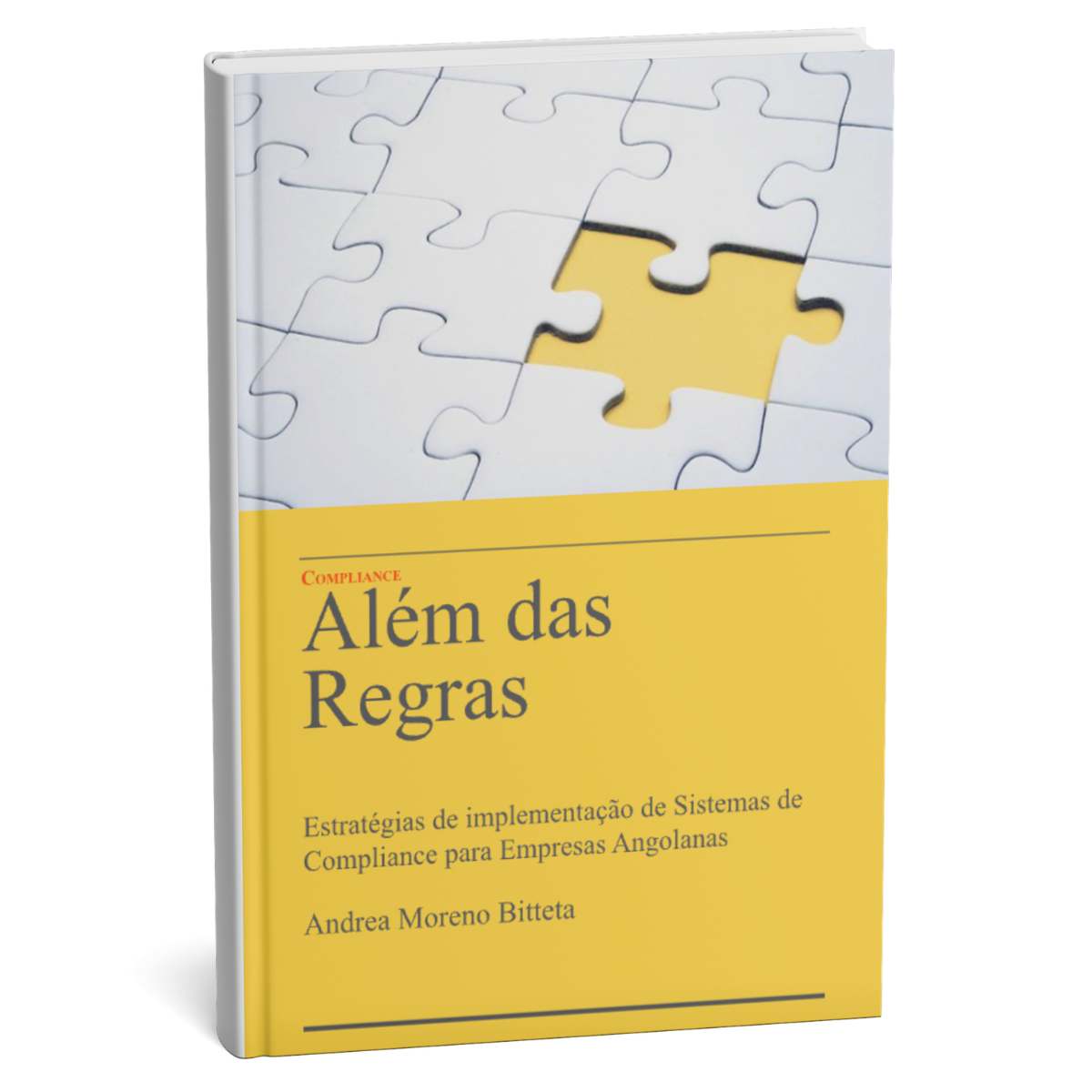
In this context, the book *Compliance: Beyond the Rules— Strategies for Implementing Compliance Systems for Angolan Companies*, written by Dr. Andrea Moreno Bitteta, takes on particular significance. The book offers an in-depth examination of the role compliance should play within organizations.

“Compliance: Beyond the Rules: Strategies for Implementing Compliance Systems for Angolan Companies,” by Dr. Andrea Moreno Bitteta

How can we move from mere compliance to institutional intelligence?

One of the book’s main contributions is that it moves beyond the traditional view of compliance as merely a control function. Instead, the author presents it as a system of institutional intelligence, capable of:

This shift in approach is crucial. Mature organizations do not treat compliance as a mere regulatory checklist. Instead, they integrate it as an ongoing mechanism for assessing their internal and external environments.

In this vein, frameworks such as ISO 31000 are no longer merely technical references but have become practical tools for integrated risk management. Their approach enables decision-making based on clearer, more consistent criteria that are grounded in the organization’s reality. The ISO 31000 standard is officially presented as an international guide for managing risks in a structured manner throughout the organization.

Risk isn't just a threat—it can also be an opportunity

Another central theme of the book is its redefinition of the concept of risk.

Traditionally, risk has been viewed as something to be avoided. However, this perspective limits our ability to innovate, grow, and act intelligently. Dr. Andrea Moreno Bitteta proposes a more strategic approach: risk must be understood, analyzed, and integrated into decision-making.

When managed properly, risk can become:

This perspective is particularly relevant in emerging contexts. In such contexts, structural uncertainties coexist with development opportunities that require sound judgment, flexibility, and a long-term vision.

Why is organizational culture the true arena of compliance?

If there is one idea that runs throughout this work, it is this: compliance does not exist in documents; it exists in people.

Codes of conduct, internal policies, and regulations are necessary. However, they are not enough unless they translate into actual behavior and consistent decisions in day-to-day operations.

The author explores in depth the link between compliance and organizational culture, and demonstrates that:

An organization may have impeccable formal procedures and still fail ethically. In contrast, a strong culture of integrity can ensure sound decision-making even under pressure.

International guidelines on ethics and compliance for businesses also emphasize the importance of integrating ethical leadership, risk assessment, incentives, training, and continuous improvement into the compliance program.

Ethical Leadership: From Theory to Practice

Cultural transformation cannot be imposed by decree. It is built through the behavior of those in leadership roles.

The book emphasizes that leaders do more than just manage results. They also serve as symbolic role models within the organization. Through their decisions, priorities, and omissions, they define what is considered acceptable, what is encouraged, and what is tolerated.

When there is a disconnect between words and actions, the culture quickly erodes. Conversely, when there is alignment, integrity becomes an organizational asset.

From this perspective, compliance ceases to be an isolated function and instead acts as a strategic partner to management. In this way, it contributes to more informed, sustainable, and legitimate decisions.

The OECD emphasizes that good corporate governance fosters an environment of trust, transparency, and accountability—essential elements for strengthening organizational integrity and sustainability.

The Angolan Context: Real Challenges and Opportunities

One of the play's key distinguishing features is its strong connection to Angolan reality.

Rather than uncritically adopting international models, the book adapts concepts and tools to the local context. To this end, it considers:

This approach makes the book particularly useful. It goes beyond theory. It offers a practical and actionable perspective for public and private companies, as well as civil society organizations, seeking to establish or strengthen their compliance systems.

Beyond the Rules: A New Way of Thinking About Organizations

"Beyond the Rules" is not just a technical manual. It is a proposal to reposition strategic compliance as a central component of the organization.

Throughout the book, it becomes clear that:

In an environment where reputation, transparency, and accountability have become critical factors for success, compliance plays a role that goes far beyond mere regulatory compliance. It becomes a true competitive advantage.


Why read this book now?

“Compliance: Beyond the Rules—Strategies for Implementing Compliance Systems for Angolan Companies,” by Dr. Andrea Moreno Bitteta

If your organization faces challenges related to governance, risk, culture, or ethical decision-making, this book offers a valuable foundation for rethinking the role of compliance.

“Compliance: Beyond the Rules.” Strategies for Implementing Compliance Systems for Angolan Companies offers a practical, strategic perspective tailored to the local context. It also provides applicable tools and useful criteria to foster greater institutional awareness.

Whether you’re looking to establish a compliance program, strengthen your organizational culture, or align strategy with integrity, this book serves as a solid guide for organizations seeking to move forward in a sustainable way.

✔ What is strategic compliance?

Strategic compliance is an approach that integrates compliance, risk management, ethical culture, and decision-making. It is not limited to avoiding penalties. It also helps create value, strengthen governance, and safeguard the organization’s sustainability.

✔ Why shouldn't compliance be viewed solely as regulatory compliance?

Because a vision limited to formal compliance tends to be reactive. Today, organizations need to anticipate risks, strengthen their legitimacy, and align behavior, leadership, and strategy.

✔ What role does organizational culture play in a compliance system?

It plays a central role. Policies and codes help, but integrity is only truly established when people incorporate those principles into their daily decisions.

✔ How does ISO 31000 relate to compliance?

ISO 31000 provides principles and guidelines for managing risks in a structured manner. Applying these principles helps integrate risk analysis into strategy and decision-making.

✔ Why is this approach particularly relevant in Angola?

Because the Angolan context combines institutional modernization, stricter regulatory requirements, and new opportunities for development. In this context, compliance can serve as a catalyst for trust, sustainability, and organizational maturity.

✔ What does Dr. Andrea Moreno Bitteta’s book offer?

Dr. Andrea Moreno Bitteta

Dr. Andrea Moreno Bitteta, CEO of PetroShore Compliance, is a professional specializing in compliance, corporate ethics, and fraud prevention, with a proven track record in developing and implementing compliance systems in Angola. Her experience in consulting, training, and managing integrity programs gives her a practical and strategic perspective that is particularly valuable for addressing governance and organizational culture challenges in the Angolan context.

The book offers a practical perspective tailored to the Angolan context. It proposes viewing compliance as a system of institutional intelligence rather than merely a control function.

BLOG: practical articles for responsible leaders

Teaching ethics from childhood: the proposal of The Adventure of Ethics

La aventura de la ética (The Adventure of Ethics) is a children's book by Andrea Moreno, CEO of PetroShore Compliance, which introduces ethics to children aged 8 to 10 through a relatable and understandable story.
The project integrates education in values and social impact, with illustrations created by young people from the Down Huesca Association and all proceeds donated to this organization.

Read more "
Days :
Hours :
Minutes :
Seconds

💥 Exclusive cyber monday discount! 💥

The entire training platform
30% OFF

[CYBERMONDAY30]